


Contemporary Theatre in Szczecin
-
3XA Architecture
“Theatre is a place where man meets himself,” wrote Jerzy Grotowski, suggesting that the stage is not merely a setting for performance but a reflection of human nature. The proposal for the new headquarters of the Contemporary Theatre in Szczecin builds upon this idea as an open, layered building immersed in greenery, functioning not only as a cultural institution but also as an active extension of the city.
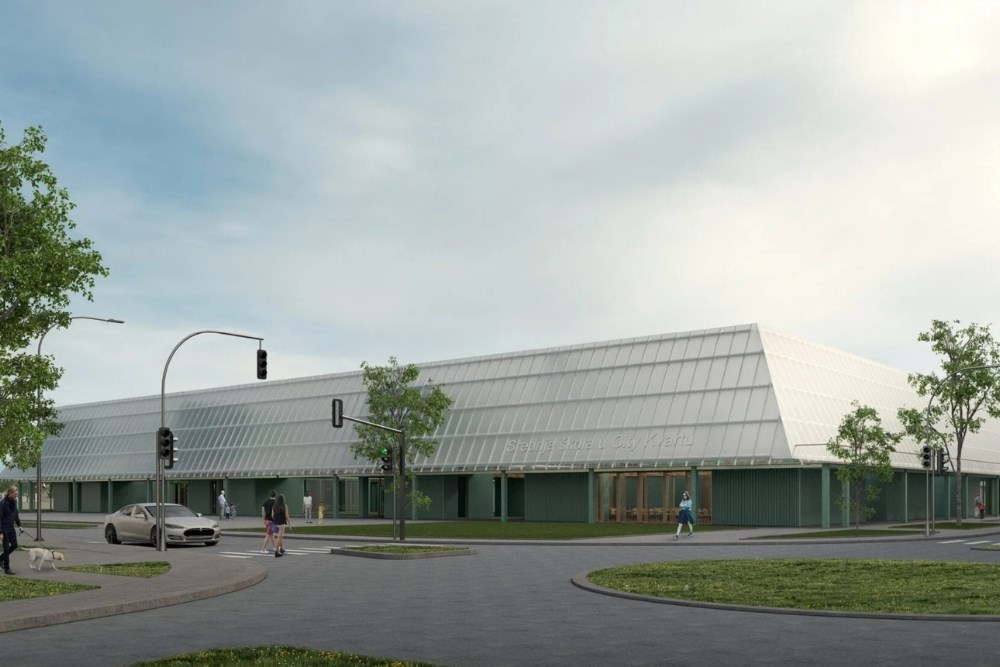
Located by the Kłodny Bridge and the Odra River boulevards, the building establishes a natural connection between the scale of the street and the monumentality of the bridge, seamlessly linking the urban fabric with the riverside landscape. Its form is composed of a series of receding volumes that, like theatrical wings, create a dialogue between what is revealed and what remains concealed. This cascading composition reduces the perceived mass of the building while creating an urban foyer and a sequence of terraces overlooking the Szczecin skyline.
The transparent façade, articulated by a rhythm of vertical divisions, references the typology of Szczecin’s public buildings, reinterpreting their order and monumentality through a contemporary architectural language. The programme is organised around three performance spaces: a flexible main stage equipped with adaptable seating and technical backstage facilities for diverse productions; a modular experimental stage conceived as an interdisciplinary laboratory for the arts; and an intimate stage designed to foster close interaction between performers and audiences.
A multi-level foyer connects the performance spaces while providing access from both the city and the waterfront. The architecture plays on the contrast between the horizontal character of the river and the vertical rhythm of the façade. Extensive glazing opens the interior towards the waterfront, while green roofs and terraces integrate the theatre into the riverside public realm. The project presents an architecture of dialogue—between art and everyday life, and between the city and the river.