




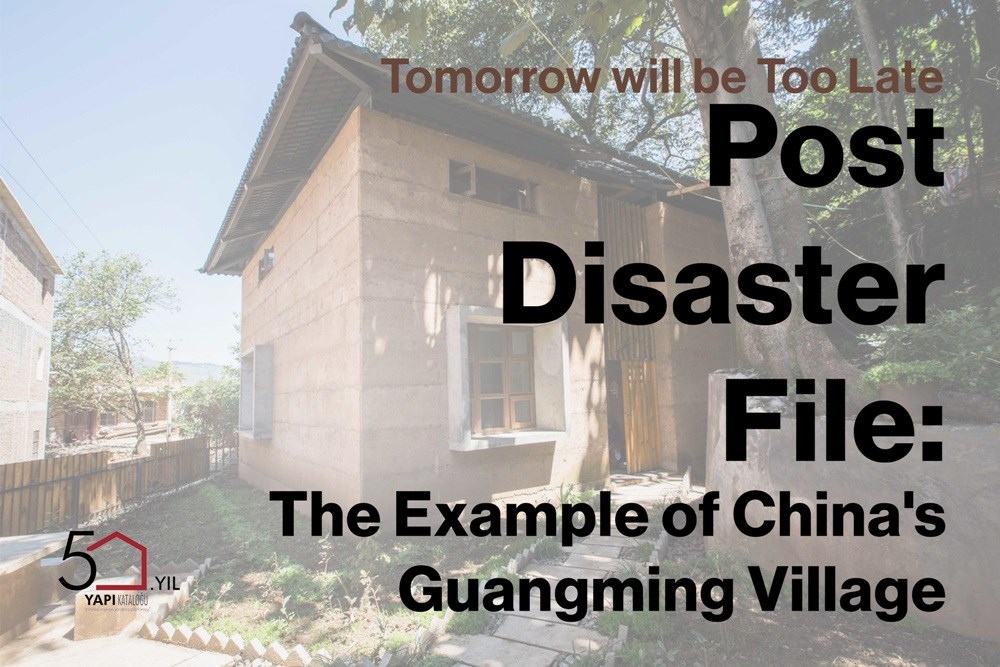
Tomorrow will be Too Late | Post Disaster File - I
On February 6, two significant earthquakes occurred in Kahramanmaraş, causing numerous aftershocks throughout the region. These seismic events had a widespread impact, affecting ten provinces and leaving behind a trail of destruction including piles of rubble, heavily damaged buildings, and partially or completely destroyed cities. As the days go by and the true extent of the earthquake's aftermath is revealed, the demand for skilled professionals in the fields of architecture, urban planning, civil engineering, and other construction-related disciplines will undoubtedly increase. These experts will play a crucial role in providing shelter for the affected population and in the process of rebuilding the affected cities.
As professionals in the building sector, what actions can be taken following a catastrophic event like an earthquake? What insights can be gained from studying these significant earthquakes? How does the current urban landscape impact the process of reconstructing after a disaster? At the Building Catalog, we are gathering these inquiries and conducting a series of editorial studies titled "Tomorrow will be Too Late”
....
The initial example assembled by Tomorrow will be Too Late - Post-Disaster File is a housing demonstration situated in Guangming Village in China, which received recognition at the World Architecture Festival in 2017.
In 2014, Ludian County in China was hit by a 6.1 magnitude earthquake, resulting in the collapse of over ten thousand buildings. Sadly, even the earth buildings in Guangming Village did not withstand the earthquake. As a result, during the reconstruction phase, villagers opted to construct their houses using brick-concrete, aiming for increased durability. However, this choice became financially burdensome for the villagers due to the soaring prices of building materials and the challenges in sourcing them.
Therefore, a team of architects and engineers from the Chinese University of Hong Kong and Kunming University of Science and Technology visited the area to thoroughly study the village's characteristics, context, architectural fabric, and climate. Their main focus was on enhancing the traditional construction method of the village to develop more earthquake-resistant structures. After completing the research, a simple housing plan was formulated, involving the local community in the construction process. A prototype of the structure was constructed to allow the villagers to replicate it themselves. Additionally, the structure underwent rigorous testing to assess its seismic performance, and it was found to have significantly improved seismic resistance while complying with local regulations.
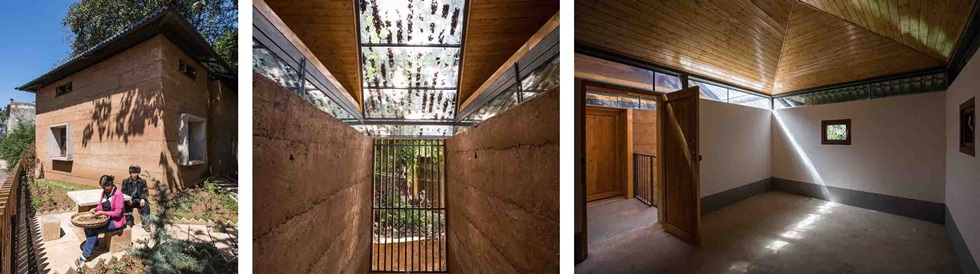
Professor NG Yan Yung Edward, who headed the group, describes the square and straightforward plan:
"This house is designed to be simple so that the villagers can easily build it. In terms of seismic resilience, it is crucial to have a simple geometry. The square shape provides more strength, so we initiated our design with a square block and opted for a basic pyramid structure for the roof."
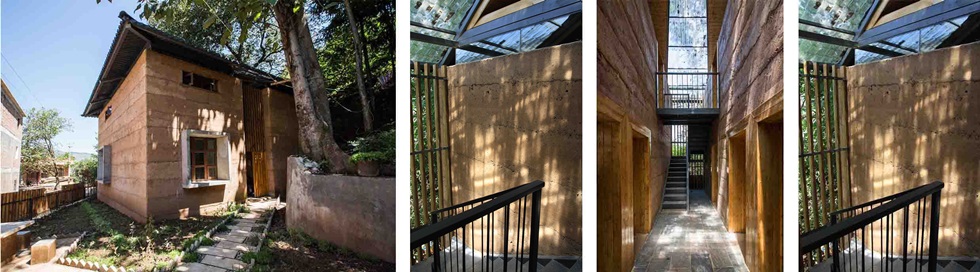
Designed and constructed as a prototype, this building is an impressive example in the field of environmental sustainability. It successfully combines traditional construction techniques with modern technology and expertise. Moreover, it is noteworthy for its impact on the economy, as it reduces construction costs to an affordable level for the residents. Additionally, it has a positive social dimension, as it involves the collaboration of multidisciplinary university resources and local villagers in the entire reconstruction process following the earthquake.
_______________________
References:
Images: